Have Additional Questions? Contact Us →

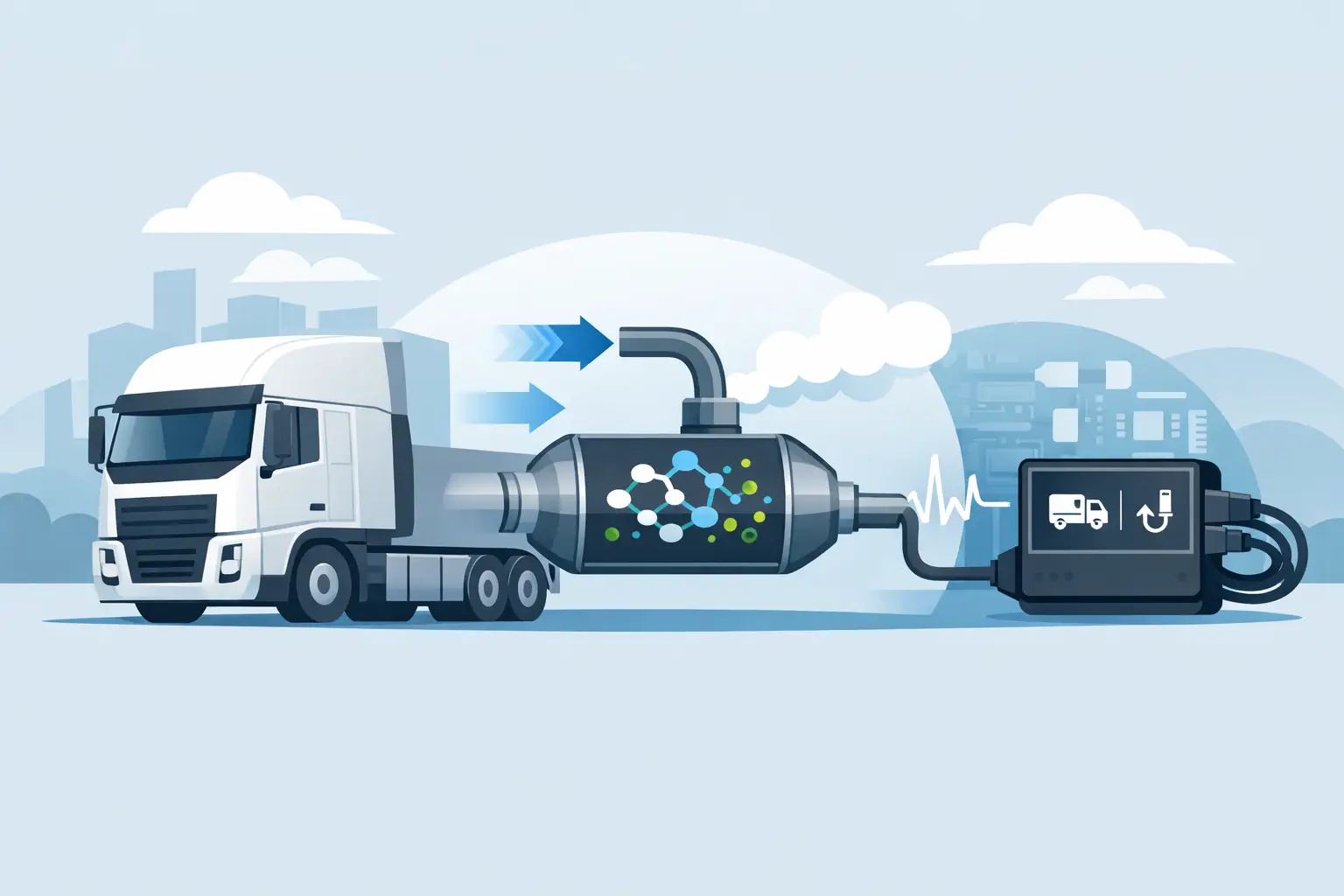
A lorry arrives with derate active, AdBlue warnings on the dash, and a fault history full of SCR-related codes. At that point, nobody in the workshop needs theory for theory’s sake. They need to know what a euro 6 lorry scr emulator does, when it is used, and what has to match before ordering one.
For professional repairers and fleet maintenance teams, this is a compatibility-driven job. EURO 6 systems are more complex than earlier generations, and SCR intervention hardware is not universal across all makes, engine variants, and electronic architectures. If the goal is to restore vehicle usability in a controlled, workshop-led way, the details matter.
What a euro 6 lorry scr emulator actually does
A euro 6 lorry scr emulator is an electronic device designed to replace or simulate expected SCR system signals within a vehicle’s control environment. In practical terms, it is used in cases where the original AdBlue and SCR system is causing faults, restricted operation, or power limitation, and a workshop requires a hardware solution matched to that vehicle platform.
That description sounds simple, but EURO 6 is not simple. On modern commercial vehicles, the SCR system sits within a wider emissions network that may involve NOx sensors, dosing modules, AdBlue pumps, temperature inputs, ACM or DCU control logic, and communication with the engine ECU. Because of that, the emulator has to be built for the correct application, not just for the badge on the grille.
A poor match usually shows up quickly. The lorry may continue to log faults, derate may remain, or communication errors may appear because the installed hardware does not align with the expected system logic. That is why experienced buyers check exact make, model, engine type, year range, and system generation before they buy.
Why EURO 6 applications need more care
With EURO 5, buyers often expect a broader fit across ranges. EURO 6 changed that. Manufacturers introduced more tightly integrated aftertreatment management, more sensor feedback, and more variation between platforms, even within the same brand.
This is where workshop buyers can lose time and money. A DAF LF application is not the same as a DAF XF. A Scania R-series variant may differ from another Scania with a different engine family or emissions setup. Mercedes-Benz, MAN, Iveco, Renault and Volvo each have their own logic paths, connector layouts and module behaviour. A euro 6 lorry scr emulator must match the exact vehicle family it is intended for.
The practical point is straightforward. If you are buying on the basis of “it should fit that make”, you are guessing. If you are buying on the basis of precise compatibility, you are working like a workshop that wants the job done once.
Euro 6 lorry SCR emulator compatibility checks
Before ordering, a technician should work through the vehicle profile properly. Start with the manufacturer and model range, then narrow down by engine, production year and emissions generation. After that, check whether the application is tied to a specific control module layout or known part number set.
It also helps to understand the actual fault background. If the vehicle has chronic AdBlue dosing issues, repeated NOx sensor faults, pump failure history, or communication problems between emissions modules, that context matters. The emulator is selected by compatibility first, but the fault pattern tells you whether the chosen route fits the job in front of you.
In many cases, workshops also want to confirm whether installation is plug-and-play or whether additional wiring work is involved. Not every unit is installed the same way. Some applications are designed around specific connectors and easier fitting, while others may require a more involved install and post-install checks. That affects workshop time, booking, and customer expectation.
Brand-specific variation is the real issue
Buyers who work across mixed fleets already know the pattern. The problem is rarely the idea of the emulator itself. The real issue is variation between vehicle platforms.
On DAF, model-specific coverage matters, especially when comparing LF applications with heavier XF and CF ranges. On Scania, there can be significant differences between standard fleet vehicles and more specialised variants such as the R730. Volvo and Renault may share broad group-level engineering logic in some areas, but application details still need checking. MAN, Iveco and Mercedes-Benz each bring their own module behaviour and installation considerations.
This is why specialist supply matters more than generic listing pages. A workshop buyer usually needs more than a product name. They need to know whether the hardware is intended for that exact commercial vehicle platform, whether the installation approach matches the vehicle, and whether expert guidance is available if the compatibility question is not fully resolved from the listing alone.
When an emulator is the route a workshop considers
In real workshop conditions, the trigger is usually operational. The lorry is losing availability, the emissions system fault is not economically viable to keep chasing, or repeated component replacement has not delivered a stable result. Fleet operators do not earn from parked vehicles, and independent workshops do not want bays tied up by repeat SCR fault returns.
That said, not every SCR fault points to the same answer. Sometimes the correct repair is direct diagnosis and replacement of failed components. In other cases, especially where there is a pattern of repeated emissions-related downtime, intervention hardware may be what the customer asks for or what the workshop assesses as the practical route.
The trade-off is clear. A proper diagnostic process gives you a clean picture of the vehicle’s condition and helps avoid fitting hardware on top of unrelated faults. But when the use case is established and the vehicle application is known, buyers usually want product availability, fit accuracy and fast shipping more than a long debate.
Choosing supplier support, not just product stock
There is a difference between a seller that happens to list SCR emulators and a specialist supplier that understands them. For professional buyers, that difference shows up before the order is placed.
If the listing is vague on compatibility, the risk moves to the workshop. If support cannot answer model-specific questions, the workshop carries the delay. If shipping is slow, the customer’s vehicle stays off the road longer. That is why practical buyers look for range depth, exact application coverage, secure payment, and expert guidance about products via email.
Truckdiag operates in that specialist space. The value is not just in stocking euro 6 lorry scr emulator hardware for major lorry brands, but in offering a product range built around real workshop requirements – compatibility depth, technical relevance, and dependable fulfilment.
Installation and expectations in the workshop
Once the correct unit is selected, the next concern is usually fitting time and job control. Workshops want a clean install, stable operation, and no ambiguity about what the hardware is intended to do. That starts with reading the product-specific instructions rather than assuming all EURO 6 systems behave the same way.
It is also sensible to check the wider electronic condition of the vehicle before and after installation. Existing wiring issues, poor previous repairs, water ingress, battery voltage instability, or unrelated ECU communication faults can complicate the result. An emulator may be correct for the application and still appear problematic if the vehicle has other electrical faults in the background.
That is why experienced technicians do not treat these jobs as blind parts fitting. They verify the platform, review the system state, install correctly, and confirm the vehicle response afterwards.
Buying the right euro 6 lorry scr emulator first time
For most professional buyers, the purchase decision comes down to three things: exact fit, supplier confidence and speed. Price matters, but less than ordering the right unit first time. A cheaper part that does not suit the vehicle usually costs more once labour, downtime and return handling are counted.
The better approach is to treat SCR emulator purchasing as a technical parts decision, not a casual accessory buy. Confirm the manufacturer, model, variant and emissions setup. Check whether the application is listed specifically rather than broadly. Use supplier guidance when there is any doubt. That extra five minutes at the ordering stage often saves hours in the bay.
A euro 6 lorry scr emulator is not complicated when it is matched correctly. The complications start when buyers assume too much, generalise across model ranges, or choose on price without checking fit. In a busy workshop, the right hardware is the one that suits the vehicle, arrives fast, and lets you move on to the next job with confidence.
