Have Additional Questions? Contact Us →

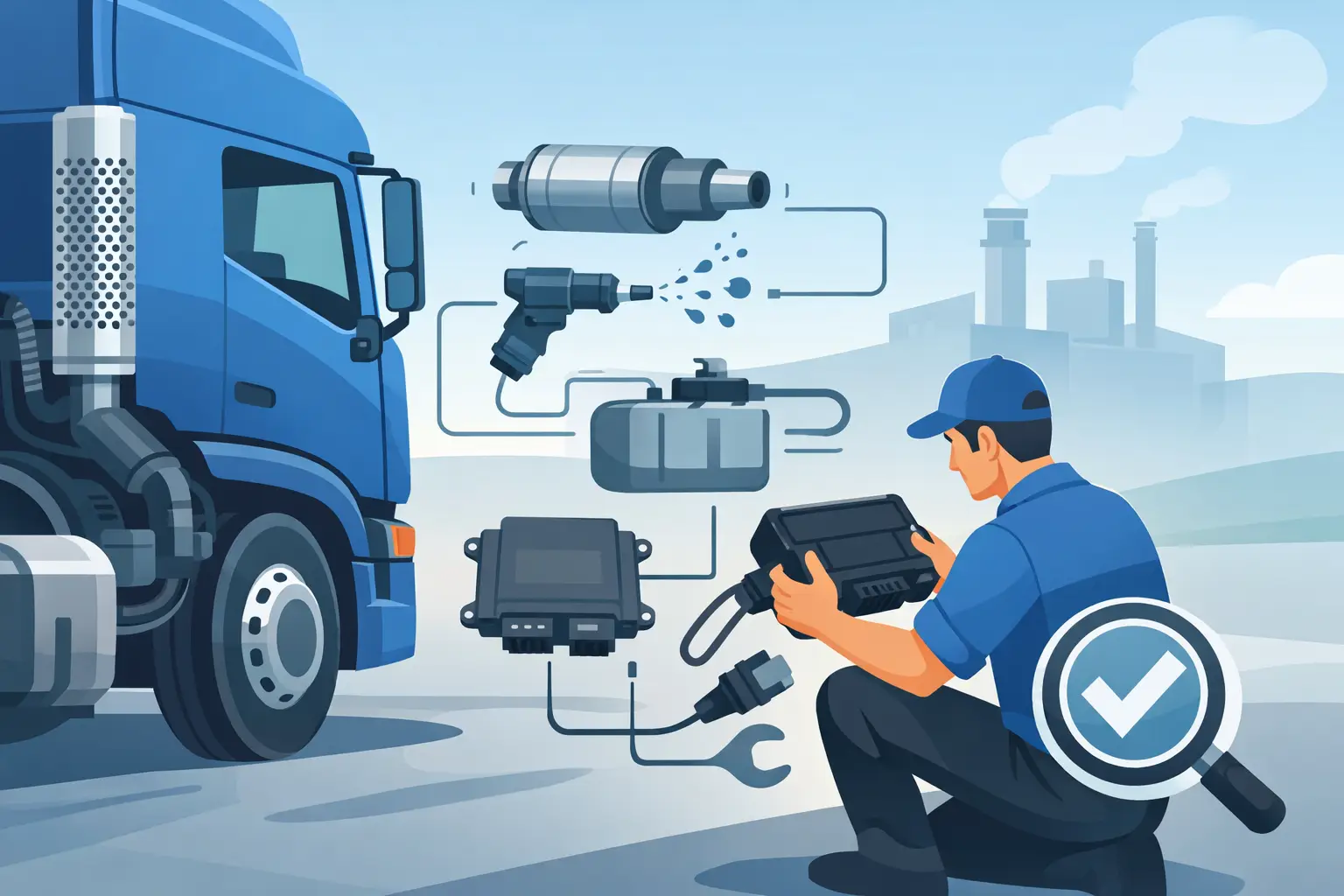
A lorry with an SCR warning, torque reduction or no-start countdown can quickly become an expensive workshop job. Searching for how to fit SCR emulator equipment is understandable, but the first decision is not where to connect a unit. It is whether the vehicle is being repaired for lawful road use or assessed in a controlled, non-road test environment.
An SCR emulator is commonly marketed as an electronic substitute for parts of the AdBlue/SCR system. On a road-going EURO 5 or EURO 6 lorry, fitting a device to suppress or falsify emissions-system signals can breach construction and use requirements, type approval conditions, MOT rules, fleet policy and insurance terms. It can also create serious liability for a workshop. For that reason, this guide does not provide wiring instructions, pin-outs, coding steps or procedures to disable an SCR system for use on public roads.
What it does provide is the method a professional workshop should use to identify the correct equipment, protect the vehicle electronics and resolve the underlying SCR fault properly.
Start with the legal use case
Before ordering or handling an emulator, record the vehicle’s intended use. If the lorry will return to public roads, the correct route is diagnosis and repair of the installed emissions system. That means restoring the SCR system, clearing faults only after repairs are complete, and confirming that the emissions warnings and derate conditions do not return.
A simulator or emulator may have a legitimate place in controlled diagnostics, training, component evaluation or approved off-road applications where local rules permit it. Those situations still require the workshop to follow the product documentation, the vehicle manufacturer’s electrical safety procedures and the rules applying to the site and vehicle.
Do not treat a device being available for a particular make as proof that it is lawful for every use. Compatibility and legality are separate questions.
Confirm the lorry specification before selecting equipment
SCR electronics are not interchangeable simply because two vehicles carry the same badge. DAF, MAN, Iveco, Mercedes-Benz, Scania, Renault and Volvo all use multiple engine, chassis, ECU and emissions-system configurations. A EURO classification alone is not enough to identify the correct diagnostic approach or test device.
Record the VIN, model range, model year, engine designation, EURO level and current ECU part numbers. Also note whether the vehicle has recently had an engine replacement, an SCR catalyst replacement, a NOx sensor repair, software update or bodybuilder electrical work. These details often explain why a fault does not behave as expected.
For example, an issue on a DAF LF can differ substantially from a fault on a long-haul DAF XF. Likewise, a Scania R730 may use a different electrical architecture from another Scania platform. Choosing by a generic listing rather than the exact application risks a no-communication condition, misleading results or damage to the wiring loom.
Where specialist test equipment is appropriate for a lawful workshop task, buy only a vehicle-specific unit with clear application information. Truckdiag focuses on compatibility-led commercial vehicle electronics because this distinction matters when workshop time and vehicle uptime are at stake.
Diagnose the SCR fault before replacing anything
The fastest repair is rarely achieved by changing the first part named in a fault code. SCR codes can indicate an electrical fault, a plausibility issue or an emissions performance condition. The stored code is the starting point, not the diagnosis.
Use a suitable heavy-vehicle diagnostic tool to read all active and stored codes from the engine ECU and relevant aftertreatment controllers. Save the report before clearing anything. Then review freeze-frame information, live data and the fault occurrence count. Check whether the fault is permanent, intermittent, temperature-related or linked to a particular operating condition.
A structured inspection should cover the following areas:
- AdBlue quality, level and contamination risk
- Supply module operation, pressure and line condition
- Dosing injector deposits, leaks and spray pattern where approved test procedures allow
- Upstream and downstream NOx sensor readings, heater circuits and connector condition
- Exhaust temperature sensor plausibility
- SCR catalyst condition and exhaust leaks
- Harness damage, water ingress, poor earth connections and battery-voltage stability
A low voltage event is frequently overlooked. Weak batteries, corroded terminals or voltage drop during cranking can trigger multiple aftertreatment faults and make a sound component appear defective. Check battery condition and charging voltage before interpreting a wide group of communication or sensor faults.
How to fit SCR emulator equipment in controlled testing
When a simulator is authorised for bench work, training or a documented off-road assessment, fitment must follow the exact instructions supplied for that product and application. Do not rely on forum diagrams, generic colours or connector photos from a different chassis. Commercial vehicle looms vary by year and specification, and an incorrect connection can damage an ECU or create a short circuit.
Isolate electrical power using the manufacturer’s approved procedure before disconnecting any controller or harness connector. On many modern lorries, this means allowing ECUs to enter sleep mode before battery isolation. Rushing this step can cause stored communication faults or corrupt module data.
Inspect every connector before making a test connection. Look for spread terminals, moisture, green corrosion, broken locking tabs and previous non-standard repairs. Never force a connector. If it does not engage positively, stop and compare the part number, keyway and vehicle application against the supplied documentation.
Keep the test installation temporary, labelled and recorded. A workshop should be able to identify who fitted the equipment, why it was fitted, what test was being performed and when it was removed. This protects the technician and avoids a test device being mistaken for a permanent vehicle repair.
After any authorised test, remove the test equipment, restore the original wiring and confirm that all connectors are secured. Then carry out a full diagnostic scan. Any new code caused by the test setup must be investigated before the vehicle is released.
Avoid the common workshop mistakes
The most costly errors are usually procedural. Clearing SCR faults repeatedly without correcting the cause can bring a lorry back with a more severe derate or countdown. Replacing a NOx sensor without checking its supply, earth and signal wiring can waste parts. Updating ECU software before saving fault data may remove evidence needed to identify an intermittent problem.
Another common mistake is ignoring exhaust leaks. A leak ahead of, or around, the SCR catalyst can alter temperature and NOx readings enough to trigger performance codes even when the dosing system appears functional. Inspect clamps, flexi sections, joints and sensor bosses carefully, especially after impact damage or exhaust work.
Also avoid mixing AdBlue-system parts across variants without checking part numbers. Pumps, injectors, sensors and tanks may look similar while having different calibration or communication requirements. The correct repair is based on the vehicle’s exact specification, not visual similarity.
Prove the repair on a proper road-use vehicle
Once the underlying fault has been repaired, use the diagnostic tool to clear codes in line with the manufacturer procedure and run the relevant actuator or guided tests. Check live values again with the engine at operating temperature. If the system supports an SCR efficiency test, run it under the required conditions rather than assuming the warning will stay off.
A road test may be necessary to complete monitors and confirm that the engine ECU accepts the repair. Monitor commanded dosing, NOx conversion, exhaust temperatures and the return of any warning messages. If the same code returns, do not force a reset. Reassess the wiring, mechanical exhaust condition, software level and test data.
The practical rule is simple: use specialist equipment to diagnose accurately, keep any emulator use within lawful controlled testing, and return road-going lorries with their SCR system operating as designed. That approach protects the fleet, the workshop and the vehicle’s long-term serviceability.
