Have Additional Questions? Contact Us →

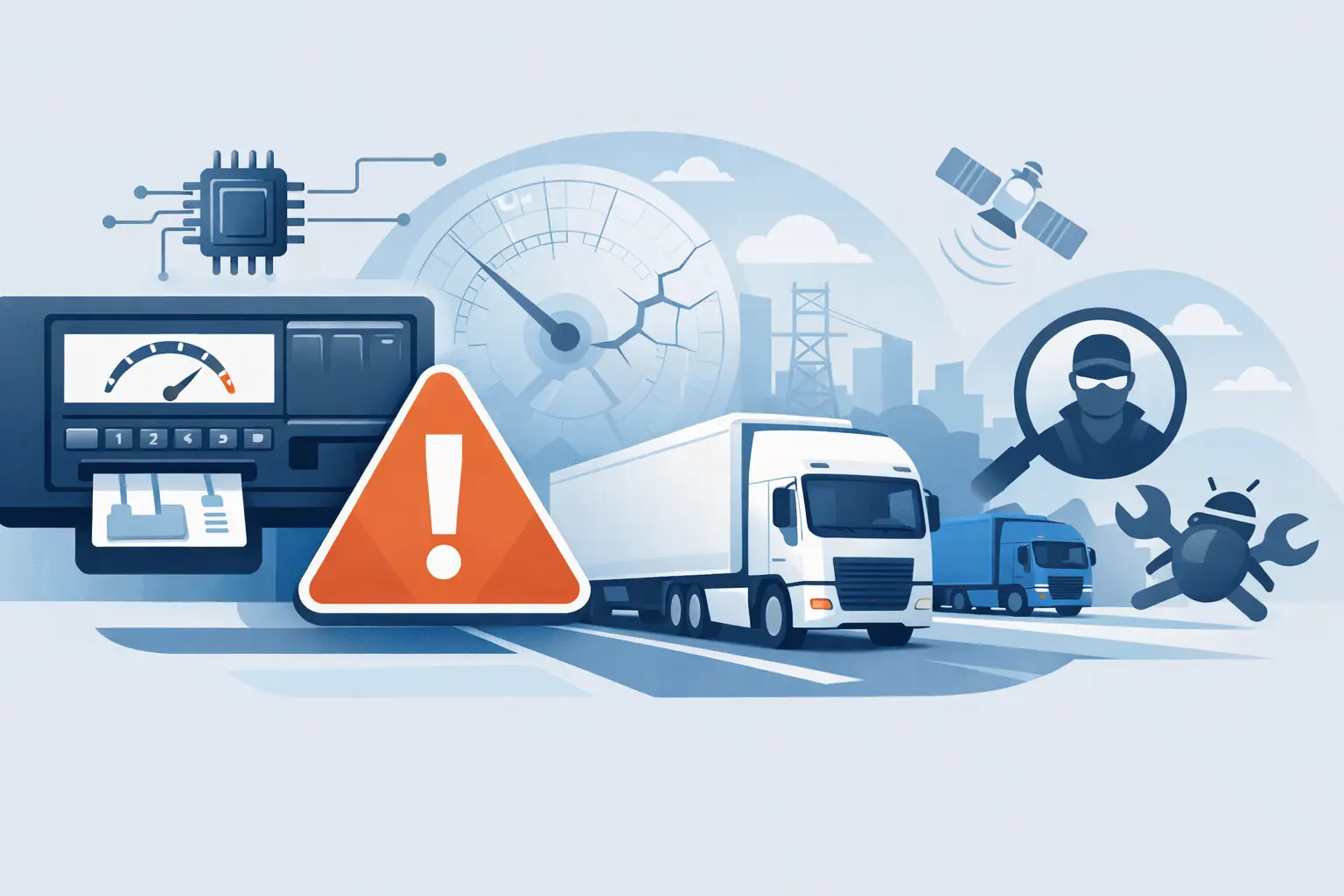
A tachograph emulator may be presented as a quick answer to a vehicle-speed or recording fault, but it creates a far larger problem than the defect it appears to address. In commercial road transport, the tachograph record is evidence of driver activity, speed and distance. Anything intended to imitate, interrupt or falsify its input can put the driver, operator and workshop at serious risk.
For a fleet, an unreliable tachograph is not merely an electrical inconvenience. It can delay a vehicle, disrupt driver planning and trigger an inspection failure. The right response is accurate diagnosis and a compliant repair route, not a device that masks the fault or changes the integrity of the data.
What a Tachograph Emulator Can Mean in Practice
The term is used loosely, which causes confusion. Some technicians may use it when discussing test signals, bench equipment or training aids. In the transport sector, however, it commonly refers to hardware designed to make a tachograph receive an artificial signal or appear to operate normally when the genuine vehicle signal is absent or altered.
That distinction matters. Approved diagnostic equipment can help identify whether a problem sits with the motion sensor, wiring, power supply, CAN communication, tachograph head unit or vehicle configuration. It does not replace the vehicle signal in normal road use. A device fitted to conceal a fault or interfere with recording has a completely different purpose.
A modern digital tachograph is part of a wider vehicle system. On many lorries, data is shared across electronic control units and can be checked against mileage, speed information, workshop records, driver-card downloads and vehicle-unit data. A false signal does not remove the evidence trail. It may instead create inconsistencies that make an investigation more straightforward.
Why a Tachograph Emulator Is a Compliance Risk
Tachograph rules exist to support drivers’ hours compliance, road safety and fair competition. Operators are expected to maintain equipment correctly, retain required records and ensure their drivers use the system properly. Deliberate interference undermines all three duties.
The immediate risk is an enforcement finding at the roadside or during a depot inspection. An examiner may identify unusual data patterns, missing motion-sensor authentication, implausible mileage changes or activity records that do not match the journey undertaken. The vehicle can be delayed or prohibited from continuing until the issue is resolved. That is expensive when a load, driver and delivery slot are already committed.
The longer-term consequences can be more damaging. Drivers can face prosecution and professional consequences. Operators may face enforcement action affecting their repute, licence and ability to keep vehicles on the road. A workshop that knowingly installs or supports tampering also risks serious legal and commercial exposure.
There is a practical insurance issue as well. Following a collision, investigators may review vehicle data, maintenance history and driver-hours records closely. Suspect tachograph information can turn a difficult claim into a much wider compliance investigation.
The Real Cost Is Usually Downtime After Detection
A shortcut can look cheaper than tracing an intermittent electrical fault. That calculation ignores the cost of a stopped vehicle and the work required once data integrity is questioned. The fleet may need an immediate replacement vehicle, re-planned deliveries, record reviews, technical inspection and corrective maintenance across other vehicles if a repeated practice is suspected.
For independent workshops, reputation is equally valuable. Hauliers choose technical suppliers and repairers because they need dependable fixes under time pressure. Returning a vehicle with a hidden tachograph issue does not protect uptime. It transfers the failure to the next roadside check, annual inspection or data download.
There is also no single pattern for a tachograph fault. A warning linked to motion data can originate from a damaged loom, connector corrosion, a voltage drop during cranking, an incorrect configuration after ECU work, a failing sensor or previous unauthorised intervention. Treating every fault as a signal problem wastes time and can lead to incorrect parts replacement.
A Compliant Workshop Process for Tachograph Faults
A disciplined diagnostic process saves time because it starts with evidence. Record the driver report, fault messages, date and operating conditions. Was the error constant, intermittent, linked to rain, vibration, battery replacement, gearbox work or a previous repair? Those details often narrow the search before a tool is connected.
Next, inspect the basics without disturbing protected components unnecessarily. Check battery condition, charging voltage, relevant fuses, earth points, harness routing and visible connector damage. Heavy-duty vehicles operate in harsh conditions, and wiring near the gearbox, chassis and cab can suffer from water ingress, abrasion and poor previous repairs.
Use suitable commercial-vehicle diagnostic equipment to read faults from the tachograph and related control units. Compare live data where the manufacturer procedure permits it. The aim is to establish whether the system is receiving credible information, whether communication is stable and whether the fault is current or stored history. Clear documentation at this stage protects the workshop and helps the operator make a repair decision.
Where the tachograph, motion sensor, seals, calibration data or security functions require attention, use an authorised tachograph centre or follow the applicable approved process. These systems are regulated for good reason. A general electrical repair that is acceptable elsewhere on a lorry may not be acceptable on a tachograph installation.
After repair, confirm that the vehicle records correctly under the proper test and calibration procedure. Keep the invoice, diagnostic report, parts information and any calibration documentation with the vehicle maintenance file. This is useful evidence that a genuine defect was corrected properly, particularly if the vehicle has already generated warnings or anomalies.
Do Not Confuse Diagnostics With Tampering
Professional diagnostics means finding the cause, validating the repair and preserving the original function of the system. Tampering means attempting to defeat the function that the system is required to perform. The line is clear even when the equipment looks similar from the outside.
A workshop should be cautious with any product described using phrases such as “no fault display”, “mileage correction”, “signal replacement” or “works without sensor” when it relates to tachograph operation on public roads. If its intended result is to make an unroadworthy or non-compliant system appear normal, it is not a repair solution.
Protecting the Fleet Before a Roadside Stop
Fleet managers can reduce tachograph issues by treating them as part of planned compliance maintenance rather than waiting for a driver complaint. Review downloaded data routinely for gaps, unexpected events, irregular distance records and repeated warnings. Early review is often less disruptive than investigating months of data after an enforcement visit.
Drivers also need a clear reporting route. They should report warning messages, card issues and suspected recording problems immediately, rather than continuing without instruction. The transport office can then decide whether the vehicle needs inspection, whether a manual record is required and whether the journey can continue lawfully under the relevant rules.
It is worth setting one firm policy for drivers, agency staff and workshop partners: no unauthorised devices, no improvised wiring and no attempt to hide a tachograph fault. Make that policy part of induction and retain records of it. Clear expectations help prevent a rushed decision by somebody trying to protect a delivery schedule.
When buying diagnostic equipment, prioritise coverage for the lorry brands in the fleet, clear software support and the ability to read relevant electronic systems accurately. The value lies in identifying the fault efficiently, not in bypassing a safety and compliance control. For mixed fleets, compatibility depth matters because DAF, MAN, Iveco, Mercedes-Benz, Scania, Renault and Volvo vehicles can each have different diagnostic access, wiring arrangements and configuration requirements.
The Better Fix Is the One You Can Defend
Every workshop decision should stand up to a customer query, a roadside inspection and a later audit. A tachograph emulator cannot provide that confidence where its function is to imitate or manipulate the genuine system. It leaves the underlying defect unresolved and places the people operating the vehicle in a vulnerable position.
If a lorry has a tachograph warning, isolate the fault, document the findings and use the correct authorised repair path. That approach may take longer than a shortcut on the day, but it protects the driver, the operator’s licence and the workshop’s reputation when the vehicle is back earning.
