Have Additional Questions? Contact Us →

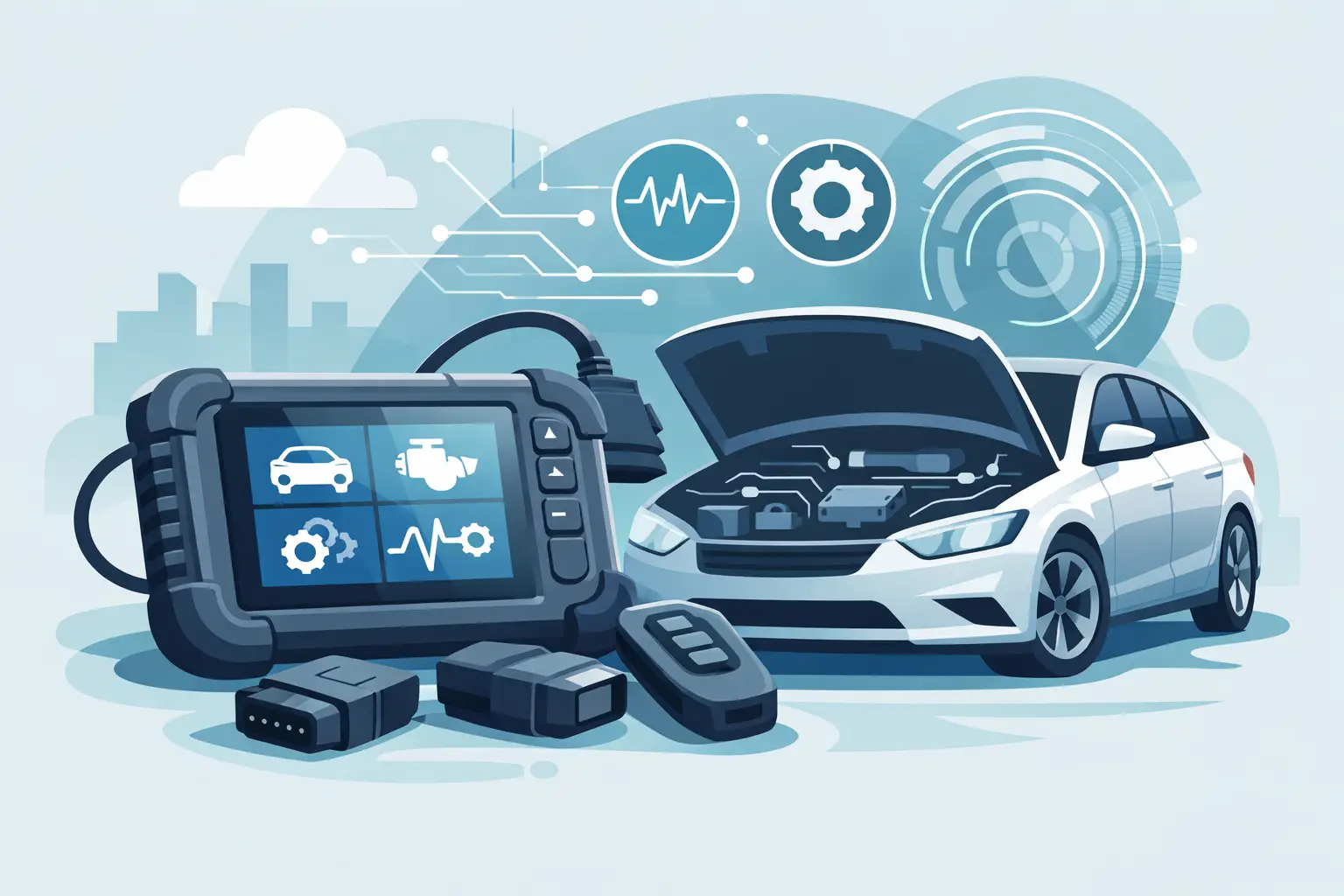
A replacement instrument cluster, damaged vehicle memory or failed control unit can turn a routine repair into a programming job. Enigmatool 2 is aimed at technicians who need to work with vehicle electronic data in a controlled, workshop-led environment, where correct identification, compatibility and records matter as much as the hardware itself.
For professional workshops, the value of a specialist programming tool is not simply the ability to access a module. It is the ability to assess the job properly before a vehicle is returned to service. That means confirming the exact vehicle, module reference, software generation and the reason the unit is being repaired or replaced.
What Enigmatool 2 is used for
Enigmatool 2 is generally associated with specialist vehicle electronics work, particularly applications involving instrument clusters, control modules and stored vehicle data. Its intended workshop relevance is in authorised repair, replacement and configuration tasks where an original electronic unit has failed, a compatible replacement has been fitted, or vehicle records must be retained correctly during a repair.
These jobs appear across passenger vehicles, light commercial vehicles and, depending on the application, specialist fleet equipment. The principle is consistent: electronic modules hold information that must be treated carefully. A unit may contain identification data, configuration settings, service information and recorded distance values. Replacing or repairing it without understanding that data can create faults, warning messages, incorrect configurations or disputes over a vehicle’s history.
For a workshop dealing with commercial vehicles, this matters because downtime is expensive. A lorry waiting for an instrument or electronic module repair is not earning. However, speed should never replace verification. A programming tool is only useful when the technician has established that the tool supports the exact vehicle and module in front of them.
Compatibility comes before the purchase
The name of a tool is not a compatibility guarantee. Enigmatool 2 may support a broad range of applications, but coverage can vary by manufacturer, model year, cluster type, control unit hardware, processor, memory type and software revision. Two vehicles from the same manufacturer can use different electronics, even when they look identical from the driver’s seat.
Before selecting any programming equipment, confirm the vehicle registration details, VIN, module part number and any visible hardware references. If the original unit is available, it should be inspected and documented before repair work begins. Photographs of labels, fault codes and vehicle condition are often useful for the job record, especially where a replacement module is being considered.
It is also sensible to establish whether the vehicle requires a bench procedure, an in-vehicle connection, additional adapters or a stable external power supply. A programming session interrupted by poor voltage can cause more than a failed write. It can leave a control unit unresponsive and turn a straightforward repair into a recovery job.
Do not assume one tool covers every case
Specialist tools are usually strongest in specific module families and supported software versions. A low purchase price can be misleading if the required adapter, licence, update access or technical knowledge is missing. Conversely, a higher-cost tool can be the better workshop choice if it supports recurring jobs and reduces time spent identifying module types.
For occasional electronic repairs, a workshop should weigh the cost of equipment, staff training and the risk of an unsupported job against outsourcing the work. For electronics specialists and diagnostic resellers, detailed coverage and update policy will usually carry more weight than the initial price alone.
Legal use and accurate vehicle records
Any work involving recorded mileage or vehicle identity data must have a legitimate repair purpose and a clear audit trail. In the UK, offering a vehicle for sale with a false mileage reading is unlawful, and deliberately misrepresenting a vehicle’s history can have serious legal and commercial consequences. The same principle applies where a fleet vehicle is transferred, leased, inspected or sold onwards.
A professional workshop should retain the customer authorisation, the reason for the repair, the original module details and the replacement part details. If recorded distance information needs to be addressed following a lawful repair, the customer should receive clear documentation explaining what was repaired, why it was necessary and what records were retained.
This is not paperwork for its own sake. Accurate records protect the workshop as well as the vehicle owner. They provide evidence that a module replacement or data-related repair was carried out transparently, rather than as an attempt to conceal a vehicle’s true condition or history.
For fleet operators, the maintenance file should also be aligned with internal compliance processes. Driver defect reports, service records, tachograph-related documentation and fleet maintenance history can all be relevant when a dashboard or electronic module is replaced.
A practical workflow for module-related repairs
The most dependable electronic repairs follow a disciplined sequence. Start with diagnosis, not programming. Read and record fault codes, verify battery condition and establish whether the fault lies in the cluster, a control unit, wiring, communication network or power supply. Replacing a module before confirming the root cause can result in the same fault appearing immediately in the new unit.
Next, identify the module precisely. Part numbers, software information and hardware references should be checked against the intended replacement or supported tool coverage. Where possible, retain original data and make a documented backup before any authorised work is carried out.
Power management is the next priority. Use suitable voltage support where required and ensure the connection method is correct for the application. During any electronic programming process, avoid unnecessary interruptions, weak batteries and unverified leads. These are common causes of preventable module failures.
Once the repair is complete, validate the vehicle rather than assuming the job is finished. Check warning lamps, communication with diagnostic equipment, displayed information and related functions. On a commercial vehicle, that can include confirming the instrument display, warning systems and relevant vehicle configuration operate as expected. A road test may be appropriate where it can be completed safely and lawfully.
Finally, issue a clear job record. Include the original concern, diagnostic findings, parts fitted, module references, any authorised configuration work and the final verification results. This creates a professional handover and helps the next technician if the vehicle returns.
Where Enigmatool 2 fits in a workshop tool range
Enigmatool 2 should be viewed as a specialist addition rather than a replacement for core diagnostics. A capable workshop normally needs more than one category of equipment: a diagnostic platform for fault finding and live data, battery support equipment, suitable leads and adapters, and access to accurate technical information. For heavy-duty work, manufacturer and vehicle-specific diagnostic coverage remains essential.
The tool is likely to make most sense for businesses that regularly encounter electronic module repairs, instrument-cluster replacements or data recovery tasks. It can also be relevant to vehicle electronics specialists who receive work from independent garages that do not want to invest in dedicated programming equipment.
For a general service workshop, the decision depends on job volume. If module work appears only a few times a year, an external electronics partner may be more practical. If the workshop repeatedly loses profitable work because it cannot support authorised cluster or module repair, investing in the right equipment and training can shorten turnaround times and keep the repair under one roof.
Questions to ask before choosing the tool
Ask whether the exact vehicle applications you see are listed as supported, and whether support applies to the specific module generation rather than merely the vehicle brand. Check what is included in the package, whether adapters or software access are required, and how updates are handled.
Also consider the support available after purchase. Specialist programming equipment is not a generic code reader. When a module reference differs from expectation or a vehicle has previous repair history, access to informed product guidance can save hours of unproductive testing. Truckdiag supplies specialist equipment for technical vehicle work, where accurate compatibility checks are central to selecting the right product.
Training should form part of the purchase decision. A tool in an unused drawer does not reduce downtime. The technician using it should understand module identification, stable power requirements, basic network diagnosis and the legal responsibility attached to vehicle data.
The best Enigmatool 2 purchase is therefore one linked to a defined type of authorised workshop work, supported vehicle applications and a documented repair process. Used with sound diagnosis and clear records, specialist programming equipment helps a workshop complete difficult electronic repairs with the care customers and fleet operators expect.
