Have Additional Questions? Contact Us →

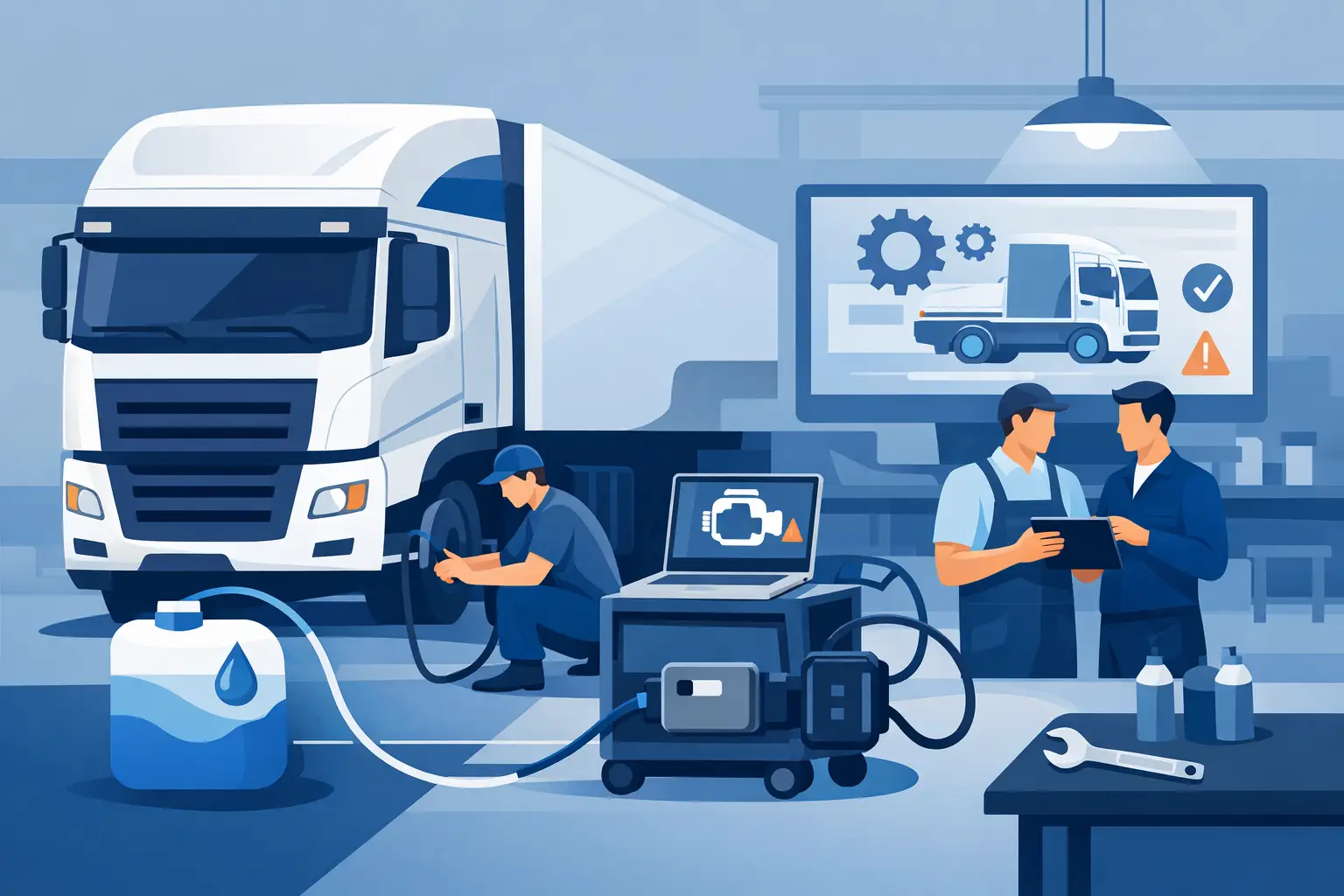
A lorry arriving with an SCR warning, torque reduction and an active AdBlue fault is not a routine service job. Lorry AdBlue bypass solutions are often considered when a vehicle is affected by persistent emissions-system errors, but the correct starting point is always fault identification, vehicle compatibility and the legal operating conditions of the vehicle.
For professional workshops, the priority is clear: establish whether the problem is a repairable SCR fault, a wiring or control-unit issue, a software configuration concern, or a component failure that requires replacement. A fast diagnosis protects workshop time, avoids unnecessary parts changes and gives the operator a clear basis for the next decision.
Why SCR and AdBlue faults cause expensive downtime
The SCR system is designed to reduce nitrogen oxide emissions by injecting AdBlue into the exhaust stream. On EURO 5 and EURO 6 commercial vehicles, that system relies on several components communicating correctly: the AdBlue tank and pump module, injector, heated lines, level and temperature sensors, NOx sensors, exhaust temperature sensors and the engine control system.
A fault in one area can trigger warnings that appear to point elsewhere. A crystallised injector may affect dosing performance. A damaged wiring loom can produce intermittent sensor readings. Low system pressure, poor-quality fluid, a failed NOx sensor or an internal control-unit fault can all result in reduced power, starting restrictions or a countdown warning. The practical consequence is the same for the operator: a vehicle that cannot complete its work reliably.
This is why generic fault-code reading is rarely enough. A workshop needs live data, stored and pending fault information, actuator tests and a basic understanding of the specific vehicle’s SCR architecture. The diagnostic approach for a DAF LF is not necessarily the same as for a Scania R730, Mercedes-Benz Actros, MAN, Iveco, Renault or Volvo application.
Lorry AdBlue bypass solutions: compatibility comes first
When assessing lorry AdBlue bypass solutions for specialist or non-road applications, compatibility must be treated as a technical requirement rather than a product category. An electronic emulator is designed around particular vehicle networks, engine-management behaviour and emissions-system configurations. Selecting hardware simply because it is described as suitable for a manufacturer can create more faults, not fewer.
Confirm the exact lorry model, model year, EURO standard, engine variant and installed SCR system before any equipment is considered. Where available, compare the original part numbers, connector arrangement and diagnostic information. A vehicle may have changed specification during a production run, and a fleet may include vehicles with the same badge but different electronics.
Workshop buyers should also separate an emulator from a repair part. An emulator does not restore the physical condition of a blocked injector, leaking line, contaminated tank or damaged harness. If the vehicle is intended for normal public-road operation, the emissions system must be repaired and remain compliant with applicable UK and local requirements. Tampering with, disabling or removing emissions controls may be unlawful and can affect roadworthiness, insurance, operator compliance and resale value.
For this reason, any specialist electronic intervention should be assessed against the vehicle’s intended use and the relevant legal obligations before purchase or installation. A professional workshop protects itself by documenting the reported fault, the test results, the work authorised and the vehicle’s operating status.
A better workshop process for repeated AdBlue warnings
Repeated warnings often tempt technicians to replace the most visible component first. That can be costly, especially where a recurring fault is caused by power supply quality, connector corrosion or a control-unit communication issue. A structured process is faster.
Start with a complete diagnostic scan and record all codes before clearing anything. Check whether faults are current, historic or intermittent, then review freeze-frame and live readings where the diagnostic tool supports them. Compare tank level, temperature, pressure, dosing demand and NOx values with expected operating conditions.
Next, inspect the practical failure points. Look for white AdBlue crystallisation around the injector and pipe connections, damaged insulation near hot exhaust sections, moisture in connectors, chafed looms and poor earth points. Check power supplies and fuses under load rather than relying only on a visual inspection. On vehicles that have stood for long periods, fluid condition and pump operation deserve particular attention.
If the system passes basic checks but the fault remains, move to manufacturer-level diagnosis. Bi-directional tests can confirm pump priming, dosing operation and sensor response. Software and calibration status may also be relevant, particularly after control-unit replacement, electrical repairs or previous programming work. The aim is not merely to clear the dash message. It is to identify why the ECU believes the SCR system is not operating correctly.
Questions to answer before ordering hardware
A short pre-order check prevents incorrect compatibility and unnecessary returns. The workshop should have four points confirmed:
- Exact make, model, engine and EURO classification
- Production year and any relevant chassis or control-unit details
- The fault codes and diagnostic findings already recorded
- Whether the vehicle’s intended use permits the proposed work
These details allow a supplier to provide more useful product guidance. They also help the technician decide whether the correct next step is repair, programming, diagnostic testing or a vehicle-specific electronic solution for an appropriate application.
Choosing specialist equipment for commercial vehicles
Commercial vehicle electronics are not an area for universal assumptions. A device suitable for one DAF, MAN or Volvo configuration may not support another generation of the same manufacturer. The same applies to diagnostic interfaces, coding tools and programming equipment. Reliable results depend on using equipment matched to the vehicle and the task.
For workshops dealing with emissions faults regularly, a practical equipment setup usually combines a capable commercial-vehicle diagnostic tool with electrical test equipment and access to accurate compatibility information. The diagnostic tool identifies system status and supports active testing; a multimeter and wiring checks establish whether the electronic fault is genuine; vehicle-specific hardware, where legitimately required, must match the installation exactly.
Truckdiag focuses on this specialist area with SCR emulator options for major EURO 5 and EURO 6 lorry brands, alongside lorry diagnostics, programming equipment and workshop accessories. For buyers, the important value is not a vague claim of universal coverage. It is being able to check the relevant application before ordering and obtain expert product guidance by email when the vehicle specification is unclear.
Fast shipping matters when a bay is occupied and a customer is waiting, but the fastest incorrect part is still wasted time. Confirming compatibility before dispatch is the better commercial decision.
Protecting the workshop and fleet operator
An SCR warning can place pressure on everyone involved. The driver wants the vehicle moving, the transport manager wants downtime reduced and the workshop needs a result that will stand up to repeat use. That pressure makes accurate records more valuable, not less.
Retain diagnostic reports, note live-data readings, photograph visible leaks or crystallisation, and record any repairs carried out. If components are replaced, retain the original part numbers and confirm whether coding, resets or adaptation procedures were completed. This record supports warranty discussions, improves handovers between technicians and helps identify repeat fleet issues.
For fleet maintenance teams, trend tracking is especially useful. If several vehicles show similar NOx sensor failures, pump-pressure faults or wiring damage, the issue may relate to operating conditions, service intervals, fluid handling or a known weakness in that vehicle group. Acting on the pattern can prevent the next roadside derate rather than simply responding to it.
The right result is a lorry that leaves the workshop with a known fault status, correctly matched equipment and a clear understanding of its compliance position. That is the standard worth applying whenever an AdBlue-related warning reaches the booking-in desk.

