Have Additional Questions? Contact Us →

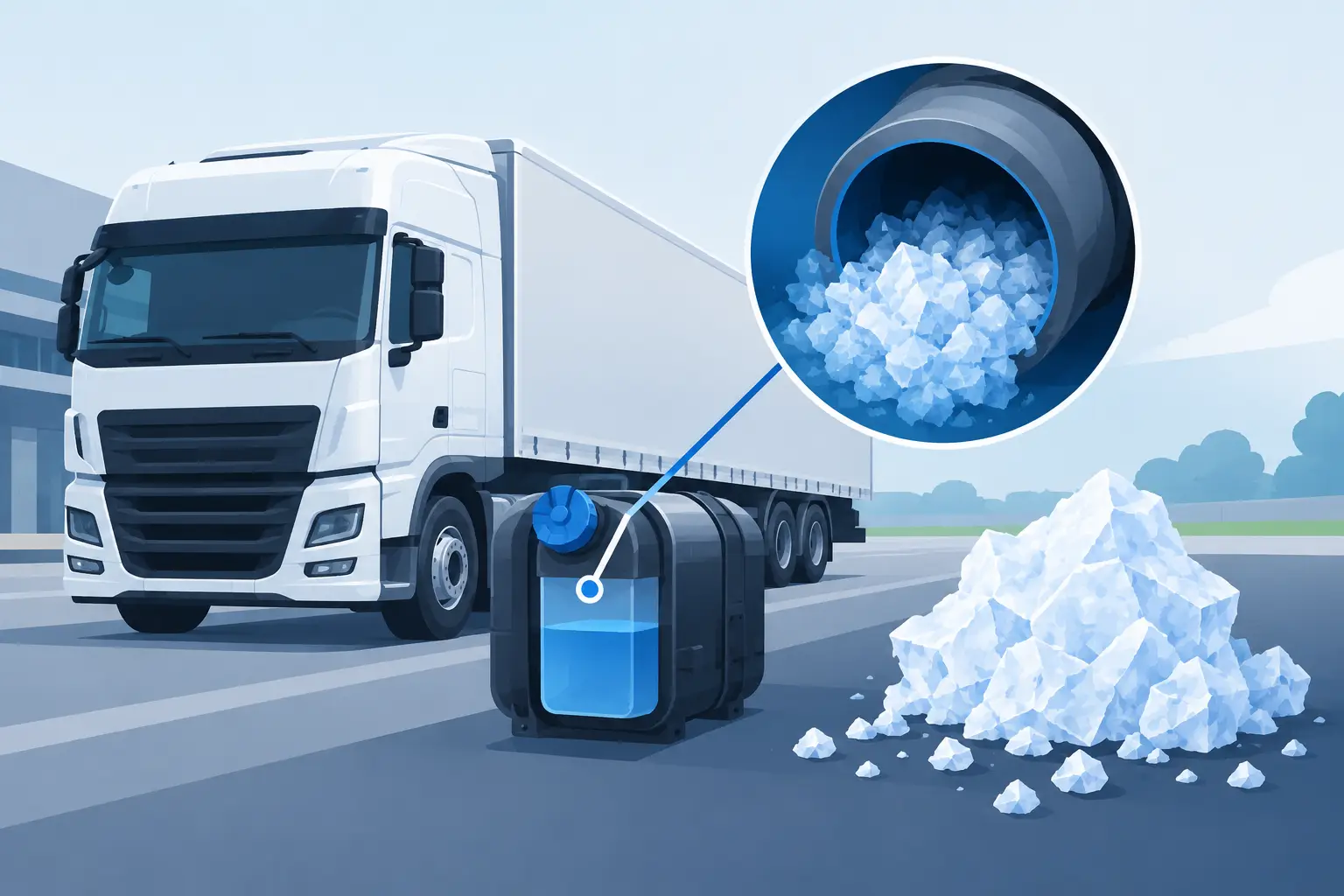
A white deposit around the dosing injector is rarely an isolated problem. On a working lorry, it can be the visible result of incorrect dosing, poor exhaust conditions, contaminated fluid or a leak that has been allowed to develop. Understanding AdBlue crystallisation causes helps workshops deal with the fault at source, rather than repeatedly replacing components and returning the vehicle to service with the same underlying issue.
AdBlue deposits can restrict the injector, block the mixing pipe, damage the SCR catalyst and trigger NOx-related fault codes. If the system cannot control emissions, the vehicle may enter a torque-reduction strategy or display a countdown warning. For fleet operators, that means avoidable downtime. For workshops, it means a diagnostic process needs to be more than a quick code read and parts swap.
What AdBlue crystallisation actually is
AdBlue is a precisely controlled solution of 32.5% high-purity urea in demineralised water. It is injected into the exhaust upstream of the SCR catalyst, where heat converts it into ammonia. The catalyst then uses that ammonia to reduce harmful NOx emissions.
Crystallisation occurs when the water element evaporates or when the injected fluid does not fully convert and disperse through the exhaust system. The remaining urea dries into white, chalk-like crystals. These deposits may form at the injector tip, inside the dosing pipe, on the mixer, within the SCR catalyst inlet, or externally around a leaking pipe connection.
A small amount of residue may be seen during inspection, particularly around an injector area exposed to high heat. Heavy or repeated build-up is different. It points to a condition that is preventing the SCR system from injecting, atomising, mixing or converting AdBlue correctly.
Main AdBlue crystallisation causes
Injector leaks, poor spray pattern and blocked dosing valves
The dosing injector is one of the first components to inspect. It must deliver a controlled quantity of fluid in a consistent spray pattern. A nozzle that dribbles, sticks open, leaks after dosing or has a partially blocked outlet can place too much fluid in one area of the exhaust.
Instead of finely atomised fluid mixing with hot exhaust gases, larger droplets collect on the pipe wall. Water then evaporates and crystals build up. In severe cases, the injector itself can become restricted by deposits, worsening the fault each time the system operates.
Check the injector tip for visible contamination, but do not stop there. Carry out the manufacturer-approved dosing test using suitable diagnostics, assess the commanded and actual system values where available, and inspect the electrical connector and supply line. A clean-looking injector can still have an incorrect dose or poor atomisation.
Exhaust temperatures that are too low
SCR systems depend on correct exhaust temperature. If the exhaust is too cool, the injected AdBlue may not decompose and mix as designed. It can settle in the exhaust, dry out and form deposits.
This is common on vehicles doing prolonged idling, short low-load work, yard movements or stop-start urban duty. However, operating pattern alone should not be blamed before the system is tested. A lorry that regularly runs at working temperature can still suffer crystallisation if an exhaust temperature sensor is reading incorrectly, the thermostat is faulty, regeneration is interrupted, or another engine fault is keeping exhaust gas temperatures below the required range.
Compare live temperature data across the relevant sensors. Look for values that are implausible at cold start, slow to respond, or inconsistent with engine load and exhaust position. A sensor fault can lead to incorrect SCR dosing decisions even when no obvious temperature-related warning is active.
Failed mixing, exhaust leaks and damaged pipework
After injection, AdBlue needs adequate space, gas flow and turbulence to mix before it reaches the SCR catalyst. Many Euro 5 and Euro 6 systems use a mixer or carefully shaped exhaust section for this reason. Damage, incorrect assembly, soot loading or physical distortion in this area can affect fluid distribution.
Exhaust leaks are equally relevant. A leak near the injector, mixer or SCR inlet can alter gas flow and lower local temperatures. It may also leave external white crystals around clamps, joints and flex sections. The deposit location often gives a useful clue: crystals on the outside of a connection suggest a fluid leak, while internal deposits around the mixer point more strongly towards a dosing or conversion issue.
Inspect the complete exhaust path, not only the SCR unit. Check dosing pipes for chafing, poor routing, loose fittings and heat damage. Any repair must restore the correct pipe layout and sealing arrangement. Improvised changes around the dosing section can create repeat faults.
Poor-quality or contaminated AdBlue
AdBlue must meet ISO 22241 specification. Contaminated, diluted or incorrectly stored fluid can cause damage to pumps, filters, injectors and sensors, while also increasing the likelihood of deposits.
Contamination may come from dirty transfer equipment, unsuitable containers, fuel or coolant ingress, or topping up with fluid of unknown origin. Even a small amount of contamination matters because SCR components are designed for a very clean fluid. Never use a container that has previously held another workshop liquid.
Storage conditions also matter. Keep AdBlue sealed, clean and protected from excessive heat and direct sunlight. Freezing is not normally a permanent problem because the solution can be used after it has thawed and mixed correctly, but repeated poor storage or an old, opened container is not good workshop practice. If fluid quality is in doubt, test it or replace it rather than risking an expensive dosing module and catalyst.
Faults that cause incorrect dosing calculations
The SCR control unit calculates dosing from several inputs, including NOx sensor readings, exhaust temperature, engine operating conditions and system pressure. A failed NOx sensor, pressure issue, wiring fault or communication problem can result in dosing that does not match the real exhaust conditions.
This does not always mean the system over-doses. Under-dosing can also create emissions faults and catalyst efficiency issues. But when there is excessive or badly timed injection, crystallisation becomes more likely.
Read the full fault memory and freeze-frame data before clearing codes. Then examine live data with the engine running and during an appropriate road test, where safe and practical. Pay particular attention to upstream and downstream NOx values, reductant pressure, pump command, tank level and quality readings, and temperature sensor plausibility. A single stored code should not automatically determine the repair.
How to diagnose crystallisation without wasting parts
A structured inspection saves time. Start by identifying where the deposits are located and whether they are internal or external. Then check the quality and condition of the AdBlue, inspect the pipework and injector, and scan every relevant engine and aftertreatment control unit.
If crystals are found in the exhaust, remove deposits using the vehicle manufacturer’s approved procedure. Do not attack sensitive parts with unsuitable chemicals or tools. The injector, mixer and catalyst substrate can be damaged easily, and loose material left in the exhaust may create further restrictions.
Once the system is clean, verify the cause before fitting replacement parts. This may require a dosing quantity test, pressure test, injector test, exhaust leak check and live-data assessment. On some vehicles, SCR adaptations or a guided test routine may be required after repairs. The exact procedure depends on the make, model, engine and emissions system fitted.
A diagnostic tool with commercial-vehicle coverage is essential here, but generic code access is not always enough. Workshop-level functions for guided tests, actuator commands and live SCR data are more useful when tracing a repeat crystallisation complaint.
Preventing repeat deposits after repair
The repair is only complete when the operating cause has been addressed. Use verified ISO 22241 AdBlue, keep filling equipment clean, and inspect the injector area during regular service work. Where a fleet works mainly at low load, allow for operating patterns that bring exhaust temperatures up during normal duty, while still investigating any temperature or regeneration faults rather than treating them as routine.
For vehicles with a history of SCR warnings, record the fault codes, deposit location, fluid condition and completed tests on the job card. That record is valuable if the vehicle returns, particularly where multiple drivers or depots handle AdBlue filling.
Emissions-control systems should be repaired and returned to compliant operation. Bypass modifications may create legal, inspection, insurance and fleet-contract risks, while leaving the original engine or exhaust fault unresolved.
The fastest way to deal with AdBlue crystals is not to clean them twice. Find out why the fluid dried in that location, prove the repair with live data and dosing checks, and return the lorry to service with the SCR system working as intended.
