Have Additional Questions? Contact Us →

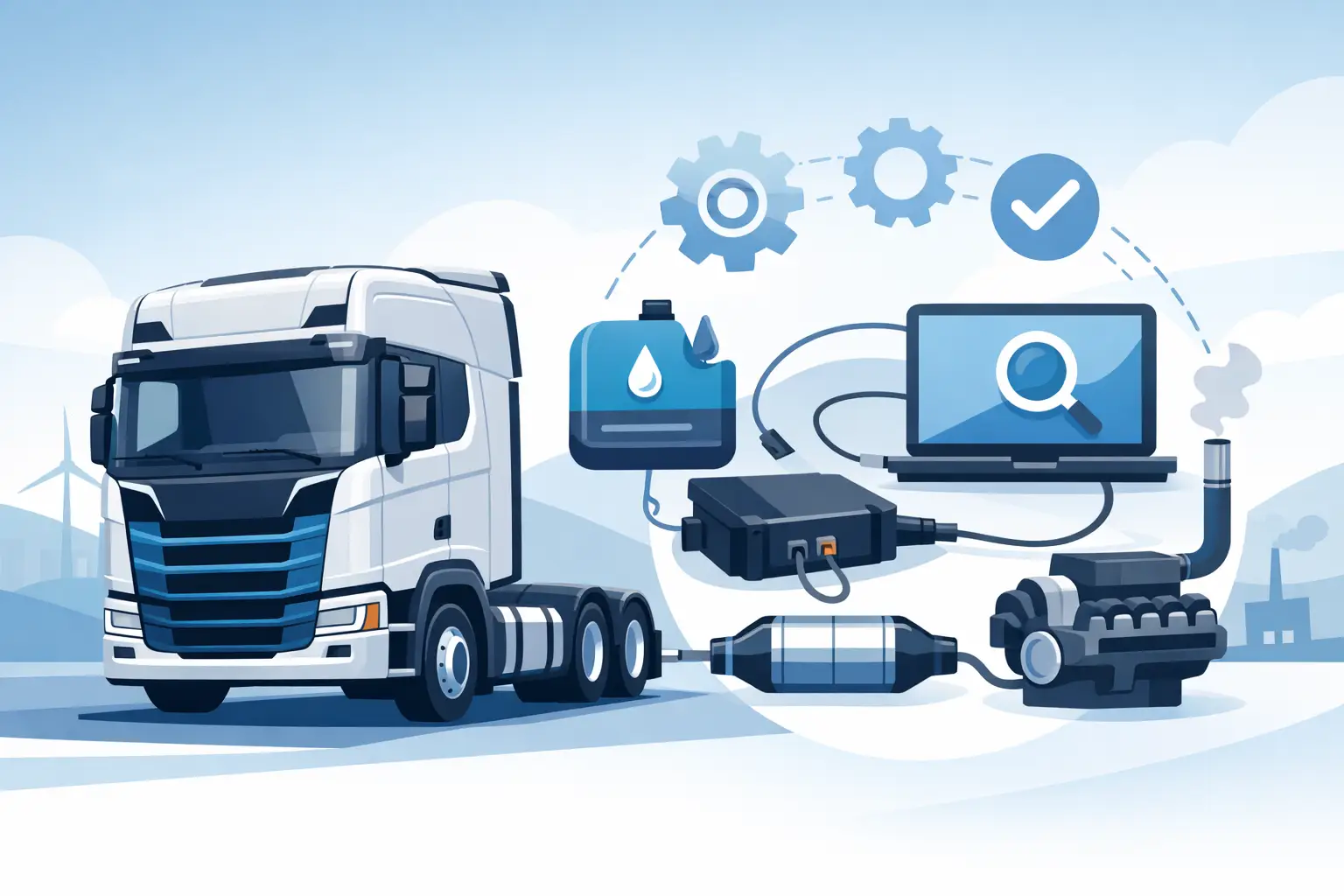
When a Scania R730 starts logging persistent AdBlue and SCR faults, the problem is rarely just a warning lamp. It becomes lost time in the workshop, reduced vehicle availability, and pressure to identify whether the failure sits with the dosing system, NOx sensors, wiring, ACM communication, or a wider emissions fault chain. That is why interest in a scania r730 scr emulator is usually driven by a specific workshop need rather than curiosity.
For fleet operators, independent repairers, and vehicle electronics specialists, the R730 presents a familiar challenge. It is a high-value working lorry, often expected to cover serious mileage with minimal downtime. When the SCR system begins to cause repeat restrictions, the question is not simply whether a part can be replaced. The real question is whether the chosen solution is correct for the exact vehicle configuration, software generation, and fault pattern.
Scania R730 SCR emulator applications
A Scania R730 SCR emulator is typically considered when the vehicle has ongoing SCR-related issues that are difficult, uneconomical, or impractical to resolve through standard component replacement alone. In workshop reality, this usually means repeated NOx sensor errors, AdBlue dosing faults, pump communication problems, derate-related issues, or faults that return after previous repair attempts.
The key point is vehicle-specific compatibility. An R730 badge alone does not tell the whole story. You still need to consider EURO standard, engine management architecture, connector type, and the way the emulator is designed to communicate with the vehicle’s existing electronics. On Scania platforms, that detail matters. A unit that works on one generation may not be suitable for another, even when the model designation appears similar.
This is where professional buyers tend to separate a proper workshop purchase from a generic online gamble. The right hardware should be matched to the lorry, not bought on assumption.
Why compatibility matters on the Scania R730
On heavy commercial vehicles, emissions control systems are tied closely to engine management, aftertreatment logic, and instrument cluster reporting. The Scania R730 is no exception. If you fit the wrong emulator, the best-case outcome is that it simply does not operate as intended. The worse outcome is intermittent faults, incomplete fault suppression, continued warnings, or wasted labour tracing a problem caused by a mismatch in the first place.
When checking compatibility, professionals usually look at the EURO 5 or EURO 6 platform first. After that, the practical checks become more specific: harness layout, module type, installation method, and whether the emulator is designed for the exact Scania application rather than a broad “fits most” claim.
A dependable supplier will treat compatibility as the first technical step, not an afterthought. That saves time before the order is placed and reduces avoidable returns, fitting issues, and repeat workshop visits.
EURO 5 and EURO 6 are not interchangeable
This is one of the most common purchasing mistakes. Buyers sometimes assume that because both systems relate to SCR and AdBlue, the hardware logic is close enough to overlap. In practice, that assumption creates problems. EURO 5 and EURO 6 systems differ in architecture, monitoring strategy, and fault handling.
On a Scania R730, an emulator intended for EURO 5 should never be treated as a universal answer for a EURO 6 vehicle. The reverse is equally true. If the lorry is already in the workshop, it is worth confirming the vehicle standard from the chassis data and current diagnostic session before ordering anything.
Diagnostic history still matters
Even when the plan is to fit a Scania R730 SCR emulator, a proper fault read remains worthwhile. Not every derate or warning is actually rooted in the SCR circuit. If the root issue involves wiring damage, power supply instability, CAN communication faults, or unrelated engine management errors, those still need to be identified.
A good diagnostic process tells you whether the fault pattern matches the intended use of the emulator and whether there are secondary issues that would continue to affect vehicle operation afterwards. For a busy workshop, that is the difference between a one-visit job and a comeback.
What workshops should check before buying
The first check is always the exact vehicle application. That includes model, year, emissions standard, and any known system changes relevant to the R730 platform. The second is product type. Some buyers need a direct-fit, vehicle-specific unit with a straightforward installation route. Others are looking for stock they can supply on to their own customers and therefore need consistent compatibility information and reliable availability.
Build quality matters as well. In commercial vehicle electronics, a cheap unit that causes intermittent issues is rarely cheap by the time labour, testing, and vehicle downtime are counted. Workshops generally want stable hardware, clear fitment information, and access to technical guidance if there is a question during installation.
That practical side is often missed in generic articles. The product itself matters, but so does the buying process around it. Fast shipping, accurate listing data, secure payment, and expert guidance by email are not marketing extras for this sector. They are part of keeping a bay moving and a customer vehicle off the ramp on time.
Scania R730 SCR emulator installation considerations
Installation expectations should be realistic. A Scania R730 SCR emulator is not a substitute for basic workshop discipline. Power supply condition, connector integrity, and existing loom damage still need to be checked. If the original system has suffered heat damage, corrosion, or previous poor-quality repair work, fitting the emulator without addressing those points can lead to unreliable results.
It also helps to confirm the exact fitting method before the job begins. On some applications, installation is relatively direct. On others, access, routing, or connector positioning can make the job less straightforward than the product description alone suggests. That does not mean the unit is wrong. It means labour planning should match the vehicle in front of you.
For resellers and fleet maintenance teams, this is why specialist supply has value. Technical support before purchase is often more useful than troubleshooting after the parcel arrives.
Avoiding common workshop delays
Most delays come from three familiar causes: ordering the wrong version, starting the job without confirming the vehicle standard, or overlooking existing wiring faults. Another common issue is assuming that because a similar Scania model accepted one emulator, the R730 in the bay will do the same. On these systems, small differences matter.
The practical answer is simple. Confirm the exact application, compare it against the product specification, and only then schedule the fitting. That saves more time than trying to “make it work” once the cab is already up.
Choosing a supplier, not just a product
For professional buyers, purchase confidence is tied to more than price. The right supplier should offer a clear product range, model-specific categorisation, and enough technical information to avoid guesswork. That is especially relevant when buying Scania-specific electronics, where product naming can look similar across different applications.
A specialist seller such as Truckdiag is positioned for that type of buyer because the focus is on commercial vehicle electronics rather than general car parts. That means the buying environment is built around compatibility depth, workshop relevance, and support expectations that make sense for fleet and repair trade customers.
It also helps when stock availability is clear. If a lorry is occupying workshop space and the operator is waiting on a decision, vague supply information is not useful. Fast dispatch and dependable order handling matter because downtime has a direct cost.
Is a Scania R730 SCR emulator always the right route?
Not always. It depends on the vehicle’s condition, the customer’s operating requirements, the fault history, and the economic logic of the repair. In some cases, standard system repair remains the better option, particularly where the failure is isolated, parts are available, and the rest of the emissions system is in sound condition.
In other cases, repeated failures, high repair cost, or persistent operational disruption make an emulator the more practical workshop solution. The point is to treat it as a technical decision, not a generic one. Buyers who work this sector every day already know that the cheapest path on paper is not always the quickest or most reliable path in service.
If you are sourcing a scania r730 scr emulator, the best results usually come from slowing down the buying decision just enough to confirm compatibility properly. A few minutes spent checking the exact application can save hours in the workshop and keep the lorry earning rather than waiting.
